ISIS Exporting Terror: Seven Suicide Bombers in Paris

A walk about Paris will provide lessons in history, beauty, and in the point of Life.
-Thomas Jefferson-

Abdel Hamid Abaaoud, the mastermind of the attack dispatched eight terrorists to the City of Lights to kill as many people as possible and focus the world’s attention on ISIS. According to the ISIS claim of responsibility the terrorists “targeted sites that were accurately chosen in the heart of the capital of France.” The soft targets included restaurants, bars, a concert hall and a stadium. The first target was packed with over 81,000 individuals who were attending a soccer game between Germany and France. The three suicide bombers arrived at the National Stadium, north of Paris in the Saint Denis neighborhood. The plan called for the first suicide bomber to make his way inside the stadium and detonate his device. This would cause a panic and as fans exited the stadium the other two suicide bombers would detonate their suicide vests among the throngs of escaping panicked people.

Any explosion inside the stadium would have caused people to flee out of the stadium. At least that appears to have been the plan. But on that evening French President Francois Hollande was in attendance to watch the soccer game. Security at the stadium was at a higher level than normal with the French President and the German Foreign Minister in the stadium. Due to this higher level of security the suicide bomber was not able to gain entry without being searched by security.

But for the three suicide bombers at the stadium nothing went according to their plan. The three suicide bombers arrived late to the soccer match. Had they arrived early they could have attacked the thousands of fans making their way towards the stadium. The first suicide bomber attempted to enter the National Stadium at Gate D. Arriving late after the pageantry of the soccer game had concluded the suicide bomber armed with a ticket and a bomb was searched as he attempted to enter the stadium. The suicide bomber was able to step away from the security guards conducting the search once he realized he wouldn’t be able to enter the stadium. He then detonated his explosive device.

The second suicide bomber was expecting a panicked throng of people fleeing the stadium from Gate H. Ten minutes after the first explosion and when no panicked people exited the stadium, he detonated his suicide vest. After the two explosions outside the stadium, French officials decided not to tell the fans or the players about the danger and decided to just let the match play out. This way the fans would be sheltered in place. They didn’t want to panic the crowd and additional time could be used for police and security to sweep the area around the stadium. In the meantime the French President was moved from the stadium.

Bilal Hadfi, third suicide bomber had moved away from the stadium once he saw no crowds leaving the stadium. The 20-year old suicide bomber knew his two friends had martyred themselves. He was expecting a panicked throng of people fleeing the stadium. Thirty-three minutes after the first explosion outside the stadium, Hadfi detonated his suicide vest on Rue de la Cokerie, just outside a McDonald’s restaurant. Hadfi, a French citizen had been living in Belgium after he had traveled to Syria to fight for ISIS. Hadfi had to return to France to obtained what he sought in Syria-martyrdom.

Tourists and Parisians all go out for dinner on weekend nights. November 13, 2015 was just another busy night for numerous restaurants, cafes and bars. For the terrorists these businesses were just other soft targets crowded with unarmed people. The terrorists attacked diners sitting outside of Le Carillon and Bar shooting diners enjoying a nice Paris night sitting outside. After killing patrons there the terrorists moved to Le Petit Cambodge, a family restaurant entering and killing numerous individuals. This team of terrorists then shot people who were outside at Café Bonne Biere and anyone else who presented an easy target.

Ibrahim Abdeslam, did not look to escape like his younger brother Salah. Instead he sat down and placed an order at a café table outside of Comptoir Voltaire Café. After placing his order he detonated his device killing only himself outside the Café.

Two vehicles, a Volkswagen Polo and a SEAT Leon were rented in Belgium by Salah Abdeslam and his brother Ibrahim. Three of the terrorists armed with AK-47s and suicide vests exited the black Polo and entered the Bataclan Concert Hall. Ismail Omar Mostefai, Sami Amimour and one other terrorist began killing people the moment they entered. The sold out concert featuring the American band Eagles of Death Metal became a site of death and carnage. From 9:30 till 12:30 a.m. a total of 89 individuals lost their lives. Police assaulted the venue killing one of the terrorist and the other two detonated their suicide belts.

By 12:30 a.m. seven of the terrorists were dead. Only one remained alive and he quickly contacted someone in Belgium to arrange his escape from the City of Lights. By morning the police would identify him and the manhunt would begin. For some reason Salah Abdeslam didn’t want to martyr himself that night. Instead he sought to escape. Clearly this was not part of the terrorist plan. Just like with Amir Kasab, the Mumbai terrorist who was wounded and captured-Salah Abdeslam didn’t become a martyr like his brother Ibrahim.

Early Saturday morning about 3:00 a.m. a Volkswagen Golf crossed from the Belgium border into France. Five hours later the vehicle was stopped as it returned to Belgium. The police checked the vehicle and its occupants and when none were “wanted” the vehicle was allowed to enter Belgium. Abdeslam Salah one of the Paris terrorists and two others were the occupants of the vehicle. Until Abdeslam Salah is captured we can expect whatever follow on attacks that ISIS had planned might be sped up.

But France and Belgium might not be the only areas where the threat is heightened. John Brennan, the CIA Director stated that these may “not (be) the only operation that ISIS has in the pipeline.” It is quite clear that ISIS is exporting terror globally. ISIS today threatened attacks on Washington D.C. stating in a video:

“We say to the states that take part in the crusader campaign that, by God, you will have a day, God willing, like France’s and by God, as we struck France in the center of its abode in Paris, then we swear that we will strike America at its center in Washington.” Whether we like it or not once again we have a radical Salafist terrorist organization setting its crosshairs on the United States.

Anyone who has ever visited Paris knows why Thomas Jefferson loved to walk the streets of Paris. Some of those homegrown terrorists missed out on what Jefferson called the point of Life. France was the first country to aid our new nation seeking independence. Today France has declared war on ISIS. The United States needs to take a leadership position in the world and solve the problem once and for all.

While it is still early, the Paris attacks conducted on November 13, 2015 are similar to the November 26, 2008 Mumbai attacks. Both attacks utilized firearms attacks on soft targets. In both attacks none of the terrorists planned to escape and all were to become martyrs. The watershed moment of the Paris attacks is that the world needs to recognize that ISIS is now exporting global terror.

In October 2015, the ISIS affiliated group in Egypt claimed credit for downing a Russian aircraft in the Sinai killing all 224 people on the flight. From early reports it appears that a bomb was placed onboard the aircraft.

In August 2015, three Americans thwarted an attack on a high-speed train traveling from Amsterdam to Paris. The gunman exited the restroom armed with an AK-47 but was captured after a struggle on the train. The master mind of the train attack also directed the Paris attack. Abdel Hamid Abaaoud, a Belgium citizen is a hardcore jihadist who even recruited his younger brother to fight in Syria. Abaaoud is the mastermind of the Paris attacks and is a close friend with Salah Abdslam, who is still on the lam. On January 15, 2015, Belgium police raided the cell he had set up in Virviers, Belgium discovering automatic weapons, police uniforms and chemicals needed to make TATP, the same explosive used in the Paris attacks.

Soft targets equal high casualties. Restaurants, cafes, bars, concert halls and stadiums are all soft targets. Terrorists know that they can do horrific damage before police respond and neutral the threat. One example of this is delay in police entering the Bataclan Concert Hall. Armed with the knowledge that the terrorists had AK-47s and suicide vests it appears that the first responders faced a number of challenges attempting to enter this venue.

Simple tactics and simple weapons can have devastating results. The terrorist were armed with AK-47s and suicide vests. They employed simple tactics of being mobile and using cover and reload techniques inside the Concert Hall. With one shooter covering individuals, the other terrorist could reload and then shoot individuals.

Security can stop and impede terrorist access avoiding greater casualties. At the National Stadium, one of the suicide bombers could not gain entry due to security wanting to search him. Instead he had to step back from security where he detonated his device. While we are unsure if the terrorists knew that the French President was in attendance at the Stadium, his mere presence raised the normal level of security.

Protecting certain soft targets will continue to create challenges. Stadiums are designed to move large numbers of people into and out of in a small amount of time. If the suicide bombers had targeted the flow of fans coming early into the stadium the casualties here would have been much higher.

News Media creates a feeding frenzy. Any complex terrorist attack will command the news cycle and is part of the terrorist feeding frenzy that encourages copycat and future attacks. There is a need to find a balance of reporting these incidents and not creating a feeding frenzy.

The United States has trained law enforcement and the first responder community to be prepared for incidents within a community. For the last five years all law enforcement has undertaken active shooter drills and training. The United States needs to prepare for simultaneous attacks in multiple locations in multiple cities.

Radicalization: Social Media and the Rise of Terrorism

Radicalization and Homegrown Violent Extremist

Radicalization takes many forms. There is no single pathway for someone to become radicalized. Brian Jenkins, speaking at one of the Terrorism Research Center’s training programs stated that “radicalization as a whole is a process of adopting for oneself or inculcating in others a commitment not only to a system of beliefs, but to their imposition on the rest of society.” Individuals here in the United States have been identified, manipulated, motivated and radicalized to undertake activities that have run the spectrum from raising money, providing material support, travel to fight jihad, to plotting operations in the United States.

Many of those radicalized have associated themselves with a spiritual mentor. This individual might be someone educated in the religion or even someone with more religious experience than the convert. Some mentors might be from a mosque or might be accessed via the internet. Major Nidal Hasan, the Ft. Hood shooter exchanged more than a dozen emails with Anwar al-Awlaki. American citizens, Anwar al-Awlaki and Adam Yahiye Gadahn have both radicalize and recruited others for jihad. Virtual mentors have communicated with potential recruits and others deliver their message by audio tapes, books, videos, websites, blogs, chatrooms, and forums. Some of the more popular have included Abu Musab al Suri, Anwar al-Awlaki, Abu Basir al-Tartousi, Sheih Omar Bakri, Sheikh Abu Mohammad al-Maqdisi and Abu Bakr al-Baghdadi.

Adam Gadahn, in a propaganda video stated “I advise every brother who wants to work for this religion not to undertake any action before taking advantage of the wide range of resources available today on the internet. Particularly, the various manuals, encyclopedias and courses which deal with the mujahideen operational and electronic security and security in general.

The United States faces challenges from Homegrown Violent Extremists (HVEs) who have been radicalized to launch attacks here or to travel abroad for jihad.
Marc Sageman, in his book, Understanding Terror Networks stated that “The virtual community is no longer tied to any nation, a condition that corresponds to the mythical umma of Salafism, which specifically rejects nationalism and fosters the global Salafi jihad priority of fighting against the ‘far enemy’ rather than the ‘near enemy’”.

Whether the individual has been radicalized by another person or self-radicalized there is a body of work that we have seen often in the process that has incited them to undertake a path of violence. Mohammad Youssef Abdulazeez had downloaded audio recordings of Anwar al-Awlaki.

Al-Qaeda has used English speaking propagandists like Anwar al-Awlaki and Adam Yahiye Gadahn to radicalize and recruit individuals for jihad. ISIS has a constant social media campaign aimed at English speaking individuals that includes its slick, glossy, and colorful magazine entitled DABIQ. ISIS in “The Return of Khilafah” (DABIQ, Issue 1) seeks to expand its recruiting by putting out a call for “All Muslim Doctors, Engineers, Scholars and Specialists.” Most terrorist recruiting efforts have focused on recruiting young fighters but here they are seeking others with special skills. Special skills are evident in the propaganda campaign being waged against the west by ISIS from the technical skills used to create the high tech videos, editing their colorful targeted magazine and their campaign style social media blitz.

While the concepts of radicalization and recruitment have changed with ISIS’ use of social media certain themes have been used by other terrorists groups in the past. The Salafi ideology that we have seen Anwar al-Awlaki (AQAP) and ISIS use is a driver that motivates young men to carry out violent acts of terrorism. ISIS has used the internet and social media as an enabler, providing a medium familiar to their targeted audience seeking the path of radicalization.

We have seen works like Millat (Path) Ibrahim by Abu Mohammad al-Maqdisi, Ma ‘alim fi Tariq (Milestones) by Sayyid Qutb, The Call to Global Jihad by Abu Musab al Suri, and Constants on the Path of Jihad by Anwar al-Awlaki are just some of the resources that ISIS and other terrorist groups have used in the radicalization of terrorists.

Today, the danger we face is that anyone with a smart phone or internet connection can be radicalized here in the United States. Jihadi social media will continue to increase and has become one of the major weapons in ISIS’ arsenal. Facebook, Twitter, YouTube, chatrooms, blogs, messaging systems and numerous other social media platforms project the adventure and glorify the violent actions undertaken by fighters and martyrs as ISIS seeks others to follow in their footsteps.

We have seen too many individuals that have been radicalized and traveled overseas seeking to wage jihad. Moner Mohammad Abusalha from Ft. Pierce, Florida was radicalized and traveled to Syria where he became the first American suicide bomber in Syria. Shirwa Ahmed from Minneapolis traveled to Somalia where he became the first American suicide bomber there. A young man from Daphne, Alabama traveled and fought with the Al-Shabaab in Somalia. Omar Hammami made numerous videos and a rap song seeking to inspire other Americans to follow in his footsteps. The true number of Americans that have traveled to Iraq and Syria to fight is unknown. But we are constantly seeing the FBI and law enforcement identify those “stinging” some of these who are seeking to join and provide material support for ISIS and other terrorist groups.

The threat in the near future is that the United States could face a new generation of jihadists who make up part of the “Syrian-Iraqi Alumni.” These individuals having traveled overseas, fought with ISIS or other terrorist groups could return to the United States with skillsets and connections that give them a capability to undertake terrorist operations within the United States.

The Terrorism Research Center has trained thousands of law enforcement, military and intelligence officers and the threat now and in the near future continues to grow. We need to do more to equip law enforcement and our communities to understand and be able to identify this growing threat. James Comey, the Director of the FBI was on point when he stated “We have a very hard task” attempting to identify and interdict individuals inspired to launch terrorist attacks in the United States. But families of those radicalized often pick up on the changes of the person but don’t realize what they are seeing until it is often too late. Even with some intelligence or information about a person one can never know with certainty whether the individual will mobilize to violence once radicalized. The recent attack in Garland, Texas in May 2015 is a clear example of the task that law enforcement in the United States faces every day.

Even law enforcement has been targeted. On October 23, 2014, Zale Thompson, attacked four New York City Police Officers with an ax. On Facebook, Thompson had posted “Which is better, to sit around and do nothing or to wage jihad.” The threat will only continue. The United States has always been able to solve complex problems. I look forward to exploring some of the things we can do to counter the message that terrorist groups like ISIS is espousing and how working within our communities and with law enforcement we can communicate the ideas and concepts that have made America great. No ideology can compete with that.

Taken from my testimony before the Subcommittee on National Security, United States House of Represaentatives on October 28, 2015.

Special thanks to Chairman DeSantis, Ranking Member Lynch and Chief Counsel Dimple Shah.

Ambassador Ken Taylor Saved Six Americans

Thirty-six years ago Iranians stormed the American Embassy in Tehran. Fifty-two Americans were held hostage over the next 444 days. When the Iranians stormed the Embassy, a small number of Americans were able to escape and four days later they contacted Canadian Ambassador Ken Taylor. The Americans were hiding in Tehran but felt that they soon might be discovered. Few people during their lifetime ever have an opportunity to save someone else never mind save six people. Ambassador Ken Taylor placed himself at great risk and sheltered the six Americans for the next 79 days in Tehran. Tehran during the revolution became a lawless city and anyone going against the revolution was at risk. Ambassador Ken Taylor like so many true heroes always downplayed the danger he faced. Modest to a fault he once said, “the consequences, I just didn’t dwell on.”

Last week, this valiant man, the best of Canada and her diplomatic service passed away. But besides offering sanctuary to the Americans, he provided reconnaissance, information and planning for the raid that would later become known as Operation Eagle Claw. President Jimmy Carter later said that “Ambassador Ken Taylor became our greatest asset. He was our man in Tehran.”

On June 16, 1981, President Ronald Reagan presented Ambassador Ken Taylor with the Congressional Gold Medal and stated that “it’s my great honor to present the medal to Kenneth Taylor whose valor, ingenuity, and steady nerves made possible this one happy chapter in the agony of those 444 days of the hostage crisis.”

While many people know of this event in history because of the exciting Hollywood movie Argo, that movie as with many great movies takes liberties with the historical events that took place. A more realistic version of the events that took place can be viewed in the documentary entitled, Our Man in Tehran. Whatever movie version someone watches, the important thing is to honor the bravery of Ambassador Taylor and his wife and remember that thirty-six years ago our neighbor to the north stepped up and one of her diplomats not only provided sanctuary for six Americans but provided Canadian passports so that they could escape from Tehran. One neighbor looking out for the other and asking for nothing in return. That was Ken Taylor and Canada. Thanks to both for showing political courage and bravery. Taylor’s valiant act should never be forgotten.

Al-Qaeda’s Second Sanctuary

Welcome to Iran

On January 16, 2009, the U.S. designated four Al-Qaeda terrorists for sanctions under Executive Order 13224, which targets terrorists and those providing support to terrorists or acts of terrorism. Mustafa Hamid, Muhammad Rab’a al-sa Yid Al-Bahtiyti, Ali Saleh Husain and Saad Bin Laden were all sanctioned since they were enjoying Iranian hospitality and sanctuary in Iran. But these government sanctions have a limited impact since they target assets held by the individuals under U.S. jurisdiction and prohibit U.S. persons from engaging in any transactions with them. What Al-Qaeda terrorists would have assets in the U.S.? None. Rather this mechanism was a shot across the bow of Iran for providing sanctuary to these four terrorists and a host of others. What other Al-Qaeda terrorists received sanctuary in Iran? These terrorists moved into Iran knowing that they would be out of reach from capture or being killed. Bin Laden and Zawahiri both moved some of their children to Iran after the fall of the Taliban in Afghanistan.

While government officials pat themselves on the back for the most recent deal with Iran one can’t overlook that Iran wouldn’t even give up Al-Qaeda terrorists in their country. Instead and still to this day they provide a safe haven for Al-Qaeda terrorists. Iran should have been sanctioned severely for providing sanctuary to our enemy years ago. Besides quietly requesting that Iran turn these individuals over, the U.S. government issued a statement. “It is important that Iran give a public accounting of how it is meeting its international obligations to constrain al Qaida,” said Stuart Levey, Under Secretary for Terrorism and Financial Intelligence

Our government should take a page from Plain English Champion, Professor Joseph Kimble. One of my favorite law school professors, Kimble calls for Plain English. Instead of calling out Iran for providing sanctuary in Plain English, the U.S. dances around the issue sending subtle signals. We should have demanded that Iran hand over Sayf al-Adel and the rest of the Al Qaeda leadership living under “house arrest.”

Mustafa Hamid served as the primary negotiator between Al-Qaeda and Iran. Hamid better known by his kunya, Abu Walid al-Masri was one of the first Arabs to go and fight against the Russians in Afghanistan. He later served as an instructor at a terrorist camp near Jalalabad that trained in the use of explosives. Hamid is also the father-in-law of senior al-Qaeda Commander Sayf al-Adel. While in Iran, Hamid was harbored by the Islamic Revolutionary Guard Corps (IRGC), which served as Hamid’s point of contact for communications between Al -Qaeda and Iran. During the mid-1990s, Hamid reportedly negotiated a secret relationship between Osama Bin Laden and Iran, allowing many Al-Qaeda members safe transit through Iran to Afghanistan. Hamid negotiated on behalf of Al-Qaeda in an attempt to relocate Al-Qaeda families to Iran. In 2002, Mustafa Hamid facilitated contacts between the IRGC and another senior Al-Qaeda military commander. In mid-2003, due to a change in Iran’s strategic posture, Mustafa Hamid and other Al-Qaeda related individuals were arrested in Iran. Hamid was jailed for the first fifty days alone in solitary confinement then moved into a cell with other Al Qaeda members. After one hundred and fifty days he was moved to house arrest and was able to maneuver with surveillance.

Muhammad Rab’a al-Sayid al-Bahtiyti was a senior member of the Egyptian Islamic Jihad (EIJ) and an Al-Qaeda member. Bahtiyti served as a trusted aide to his father- in-law,  Ayman al-­Zawahiri, the current leader of Al-Qaeda. After the September 11th attacks, Bahtiyti moved Zawahiri’s daughters to Iran, where he was responsible for them. In January 2003, Bahtiyti arranged housing on behalf of other Al-Qaeda members. Bahtiyti was arrested by Iranian Intelligence in mid-2003.

Ali Saleh Husain was a senior Al-Qaeda logistics operative and friend of Osama Bin Laden’s. Husain coordinated with Bin Laden on the training of fighters in Al-Qaeda camps in Afghanistan who traveled to Chechnya. In November 2001 and beyond, Husain coordinate the movements of Al-Qaeda members into Iran via his logistical network in Zahedan, Iran. He was arrested in mid-2003 by the Iranians.

Saad Bin Laden and dozens of Bin Laden family members made their way to Iran. Omar Bin Laden, the fourth oldest son stated that the “Iranian government has showed very good caring to my brothers and sisters. While held under “house arrest” they didn’t lack comforts having frequent shopping trips, trips to swimming pools, computers and video games.

On July 21, 2013, Al-Qaeda in the Arabian Peninsula (AQAP) kidnapped Nour Ahmad Nikbakht, an Iranian Diplomat as he drove to work from his residence in the diplomatic quarter in Sanaa, Yemen. This kidnapping was to provide leverage on the Iranian government. Recently, Saif al Adel, Abu Mohammed al Masri, Abu Khayr al Masri, Khalid al Aruri and Sari Shihab were exchanged for Nikbakht, the Iranian diplomat who was kidnapped in Yemen. This isn’t the first time Al-Qaeda has kidnapped an Iranian diplomat for leverage over Iran. In 2008, Al-Qaeda kidnapped Hesmatollah Atharzadeh-Nyaki, an Iranian diplomat in Hayatabad and used him to exchange for the release of Saad Bin Laden and Sulaiman Abu Ghaith.

Osama bin Laden once said that the “Iranians (are) not to be trusted.” What have we learned?

Iran Holding Americans Once Again

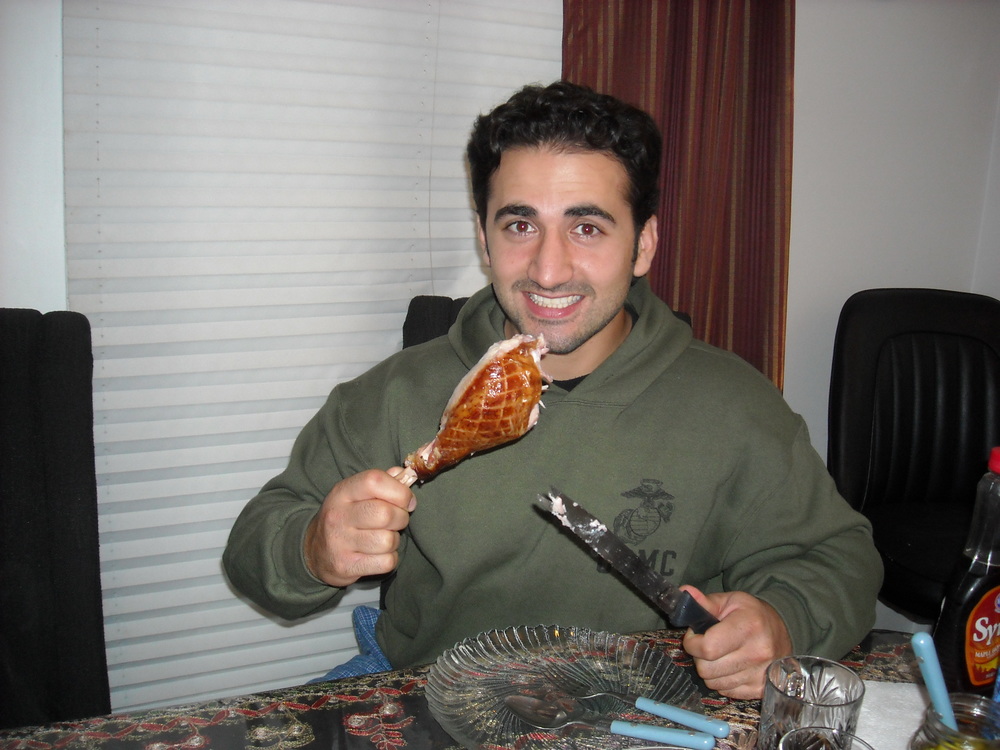
For over four years a Marine has been held as a prisoner in Iran. Once a Marine-Always a Marine. On August 14, 2011, Amir Hekmati went to Iran to visit his sick grandmother and relatives for two weeks. He was arrested and charged with “Espionage, Waging War against God and Corrupting the Earth.”  After a trial in 2012, he was sentenced to death. His sentence was overturned on retrial and Amir was sentenced to ten years on the charge of  “Cooperating with a hostile government.”  The alleged hostile government being the United States. He has been held in the notorious Evin Prison in northwestern Tehran ever since.

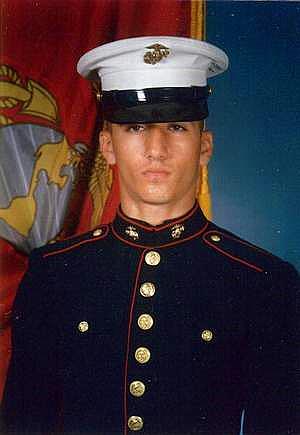
Amir Hekmati       Amir Hekmati Thanksgiving

Amir Hekmati, a dual US-Iranian citizen was born in Arizona and grew up in Michigan. He enlisted in the US Marine Corps in 2001 and served until 2005. Sergeant Amir Hekmati was a Linguist and served in Operation Iraqi Freedom.

Today, his family waits for their son and brother to be freed on these trumped up and almost laughable charges.  While our politicians make a deal with Iran, Amir Hekmati and three other Americans are being held in an Iranian prison. The other three Americans are Saeed Abedini, a Christian Pastor, Jason Rezaian, the Washington Post Correspondent in Tehran, and Robert Levinson, a former FBI agent missing in Iran since 207.

Once a Marine-Always a Marine. One of our Marines is being held and our government needs to step up and apply whatever pressure to bring our Americans home. This is like a broken record with Iran. Next we will have to tie yellow ribbons around trees and elect a President with a backbone.  Contact your Congressman or Senator and demand that they press the Administration to get our Americans home. This is the least we can do for a Marine Combat veteran.

In a September 19, 2013, Washington Post Op-Ed from the newly elected President of Iran entitled “Why Iran Seeks Constructive Engagement.”  Hassan Rouhani laid out a media campaign to improve Iran’s image in the west. Rouhani stated that “I will try to deliver the voice of the oppressed people of Iran to the world, and we should say that sanctions are an illegal and unacceptable path.”  The holding of American citizens on trumped up charges is illegal and unacceptable. President Obama should have made the release of these Americans a condition of any further negotiations with Iran. Lets get these Americans home before we enter into any agreements with Iran. After all, Iran has a history of seizing Americans.

For more information go to http://freeamir.org/

14th Anniversary of the September 11th Attacks

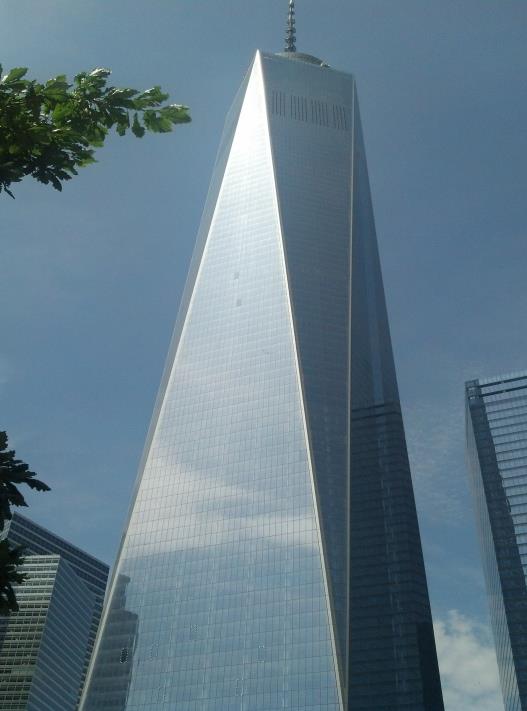
One World Trade Center

Life is precious. No one knows how long we have nor when we will depart from this earth. This morning as I sent my 14 year old daughter off to school, I spent an extra minute telling her I love her and reflected on how blessed our family has been. While my daughter has heard often about September 11th there are many individuals who don’t have a good understanding of what occurred that day and how our lives have all changed.

This week I invited two guest speakers to come talk about their experiences to a class I teach at George Mason University. The students had the opportunity to hear from my friend Bryan, who worked at Five World Trade Center 14 years ago. Bryan described in great detail what it was like that day and how he and so many others had to flee not once but twice from Ground Zero as the two towers collapsed. They heard of the initial shock, the wall of dust, particles, and debris and the smell of death that settled over lower Manhattan. During the days and weeks following the attacks, Bryan and so many others worked trying to save and then recover those lost that day. Today, Bryan and many others have health issues stemming from 9/11. Nearly 4,000 survivors and first responders have been diagnosed with cancers and other illnesses from breathing in ash, particles, chemicals, crushed glass and whatever else was in the air that day. For Bryan and those who survived at Ground Zero every day is a blessing.

The students then heard from Gary Berntsen, a retired CIA officer who spoke of the Al-Qaeda plot to attack the United States and his role after September 11th. Gary, spoke of his role in leading a group of CIA officers and Special Forces into Afghanistan. But with great passion he spoke of the bravery of those who deployed to take on Osama Bin Laden, Al-Qaeda and the Taliban. Berntsen’s book, Jawbreaker: The Attack on Bin Laden and Al Qaeda: A Personal Account By the CIA’s Key Field Commander, is a must read for anyone interested in the seven weeks it took to defeat the enemy on the battlefield of Afghanistan. Berntsen honestly spoke of why and how Osama Bin Laden was able to escape into Pakistan in December 2001. The students had an opportunity of a lifetime to speak with two individuals with great insight into the events of that day and the events that unfolded in Afghanistan. We all have a duty to make sure that this next generation understands what occurred on September 11th and the long term implications for those who gave so much that day and afterwards to keep our country safe.

Just like this morning when I sent my daughter off to school, September 11, 2001, was a sunny day that held so much promise for so many. We must never forget those who lost their lives that day and that every day there are people who are fighting for their lives due to the medical implications associated with that attack. We owe it to them to teach the next generation that with freedom comes responsibilities.

In November 2001, a New York City police commander told me of a boy from Ohio who had heard on the radio that first responders working at Ground Zero needed gloves. This boy got a box and went door to door in his neighborhood and collected over 400 sets of gloves. The boy’s father impressed with his son’s efforts drove his son and the gloves to New York City and they delivered the gloves to NYPD. Armed with knowledge this next generation will rise up like the new One World Trade Center building mirroring to the world that America is still the beacon of freedom and democracy. Today or sometime this month take some time and talk with a member of the next generation about terrorism, September 11th and the bravery of so many Americans. Fourteen years ago they were just young children but they are the future of America.

Guantanamo Prisoners Still a Threat

With the Obama Administration now worried about the fiscal costs associated with detainees at Guantanamo Bay we have reached a new low. Recently a senior official in the Obama Administration stated that it was costing $2.7 million for each detainee held at GITMO. What exactly is the cost of justice? Justice has been delayed for far too long for those individuals who have committed or assisted in the commission of terrorism against the United States.

While it is not surprising that the Obama Administration has released as many detainees as possible he is attempting to keep his pledge and close this facility. But at what cost to our future security? How many of those recently released or slated for release or transfer will go back to wage jihad or commit other acts of terrorism?

Just recently, the United States released four detainees back to Afghanistan. One of the four was Mohammed Zahir. Zahir fought against the Soviets from 1984 to 1989. He then worked as a clerk at the Police Department in Ghazni Province. Once the Taliban gained control of most of Afghanistan he worked for the Taliban Intelligence Directorate in Kabul. He returned to Ghazni in 1998 and worked for the Taliban Security Office before he was transferred to the Taliban’s Ghazni Intelligence Office. After the fall of the Taliban it was reported that Mohammed Zahir was a major weapons dealer in Ghazni Province and had Stinger missiles and uranium. Zahir’s compound was raided and he was arrested for his connections to weapons caches, weapons trafficking and his affiliations with the Taliban and members of the Haqqani Network. Items seized during Mohammed Zahir arrest included four passports, three identification cards, two Codan high frequency radios, a small sealed can marked “Heavy Water-U235 150 grams” in Russian as well as other items. Documents recovered showed that the uranium was intended for “use in a nuclear device.” More than anything else these items show intent and that Mohammed Zahir was part of these efforts on behalf of terrorists in Afghanistan.

In February 2008, the JTF-GTMO Detainee Assessment of Mohammed Zahir stated that the detainee failed “to disclose extensive details or the true nature of his Taliban activities and affiliations.” When Zahir was arrested he had pocket litter that included a memorandum to the Internal Affairs Ministry Department of Intelligence in which he identified himself as the Chief of Intelligence from Ghazni. During his detention Zahir had refused “to discuss the significance of official documents and other extremist-associated items found in his house during his capture.” The average Afghan did not have access or use Codan high frequency radios and that these were only used by Al Qaeda and the Taliban. In 2000, Mullah Omar had the Taliban’s Codan high frequency radios distributed to the “fifty-two key leaders in the Taliban.” Yet for political reasons Mohammed Zahir today is not being held in Guantanamo anymore. He is not the only individual who should never have been released from Guantanamo Bay.

In November 2001 Abdullah Mehsud was captured in Kunduz while fighting with the Taliban. Mehsud had a fake identification card and was able to convince his captives that he was an innocent Afghan. After two years in Guantanamo he was deemed to have “no further intelligence value to the United States and will not be seen for further intelligence purposes. Subject detainee has not expressed thoughts of violence or made threats toward the U.S. or its allies during interrogations or in the course of his detention. Based on the above, detainee does not pose a future threat to the U.S. or U.S. interests.” On January 18, 2003, Said Mohammad Alam Shah better known by his kunya Abdullah Mehsud was recommended for release or transfer to the control of Afghanistan. Abdullah Mehsud was able to fool those who captured him, those at Guantanamo who released him. Upon his release he immediately rallied the Mehsuds tribe in Southern Waziristan who then began kidnapping individuals, and conducted attacks on American troops, the Pakistan Army and the Pakistan government. Like Abdullah Mehsud, Abdullah Ghulam Rasoul, Mullah Shahzada, and Said Ali al Shihri, and others who were held at Guantanamo returned to the battlefield to undertake terrorist operations.

Lets not kid anyone. The prisoners still being held at Guantanamo Bay are a threat. While the most serious terrorists will be held and hopefully finally tried, this Administration has cleared 64 detainees for transfer or release. We will see terrorist attacks and a number of these individuals return to the battlefield in places like Yemen, Saudi Arabia, and other countries. To give one some background, I have selected two detainees randomly to highlight so that one may gleam some insight into those still being held. Shaker Aamer, a Saudi citizen was a member of Al-Qaeda and was close to Osama Bin Laden, Abu Musab al-Suri, Sheikh Abu al-Walid among other senior terrorist leaders. Aamer spent time in the United States and has been an Al-Qaeda recruiter, facilitator and financier. Aamer has been associated with Abu Hamza al-Masri, the former Egyptian cleric from the Finsbury Park Mosque, Richard Reid, the shoe bomber and Zacharias Moussoui. Aamer’s JTF-GTMO Detainee Assessment stated that “coupled with detainee’s membership in Al-Qaida, his desire for martyrdom and his assessed skills in recruitment and facilitation, detainee will pose a threat.”

Omar Saeed Salem al Daini was born in Hadramawt, Yemen. He is an Islamic extremist and Al-Qaeda fighter. He was recruited and travelled to Afghanistan in 2001 to attend the al-Faruq Training camp. He also recruited others to attend terrorist training camps in Afghanistan. In October 2001, he went from Kandahar to Jalalabad as Al-Qaeda emptied its terrorist training camps. While in Jalalabad he stayed in Abu Jihad’s safe house and then returned to Tora Bora as part of a small unit of fighters to take up defensive positions. Armed with Ak-47s and RPGs, Omar was present for the bombing by the US of Al-Qaeda positions in the mountains. He was part of a group of 60-70 Al-Qaeda fighters attempting to escape to Pakistan on December 13, 2001 when he was injured during the US bombing. Al Daini was knocked unconscious and his leg was broken. On December 15, 2001 he was captured and hospitalized. He spent time in various US prisons in Afghanistan before being sent to Guantanamo Bay. During his interrogation he used well known counter interrogation techniques to avoid answering questions. On May 11, 2008 he was found to be in possession of a small white piece of plastic with sharp corners.

These two random profiles shed some light into the mindset of those still being held in Guantanamo Bay. Unfortunately the Obama Administration in seeking a political solution places the closure of Guantanamo Bay ahead of protecting Americans and America’s interests abroad. These hardened terrorists and Islamic fighters if given the chance will seek to attack Americans where they can find them whether that is Yemen, Saudi Arabia, Afghanistan, Pakistan or elsewhere. To think otherwise shows great ignorance.

The PFLP Hijacking of TWA Flight 840 on August 29, 1969

ADST’s Oral Histories has a great interview with Thomas Boyatt, a Political Officer with the US Department of State who was enroute back to his posting when his aircraft was hijacked. The terrorists had the aircraft fly to Damascus, Syria where Boyatt was able to use his diplomatic skills.

Leila Khaled and Salim Issawi, had the plane fly to Damascus, where they forced all the passengers off the aircraft before they blew up the front of the aircraft. The interview provides great insight into the terrorist hijacking and the calmness this American Diplomat possessed.

http://adst.org/2015/08/the-pflp-hijacking-of-twa-840/

Prospectives on a Growing Threat

Today The Cipher’s (https://www.thecipherbrief.com/) Expert Commentary features three articles providing Prospectives on a Growing Threat.

                                    How to Defeat ISIS                                                                                                                                                      By John McLaughlin

                                    The Power of ISIS’ Message                                                                                                                                     By Patrick Skinner

                                      The Road to Jihad                                                                                                                                                          By Walter Purdy

15 Years Later: Wheels of Justice Slow for Masterminds of the USS Cole Attack

USS Cole

                                            Yemen-Another Al-Qaeda Platform

 When I returned to Aden I asked if it would not be possible to punish at least one of these plunders of peaceful caravans, so that the land, now restive and doubtful, might settle down to a reality of peace: but though everyone agreed with the necessity, there was great reluctance…owing to the constant burden of criticism at home.

                                                                                           -Freya Stark-

Aden once called the “eye of Yemen” sits on the Gulf of Aden which flows into the Arabian Sea and at the strategic entry point to the Red Sea. Yemen controls the eastern side of the Bab al Mandeb choke point at the southern end of the Red Sea. Fifteen years ago, Al-Qaeda terrorists in Aden attacked the USS Cole (DDG 67). Looking back at Yemen and what Al-Qaeda was doing in this country, the attack on a Navy warship should have surprised no one. In a Med-Arabian University brief given sailors aboard the USS Cole, Yemen was listed as having a high threat level.

Early on Osama Bin Laden thought of Yemen as a country where Al-Qaeda could freely recruit and as a safe haven. In 1998, Bin Laden stated in an interview, “In Yemen we have strong and old links, by the grace of God Almighty, besides the fact that my roots and my father’s roots go back there.” Al-Qaeda’s recruiting prowess in Yemen is evident when one looks at the number of detainees still being held in Guantanamo Bay. Yemen ranked third behind only Afghanistan and Saudi Arabia of the more than 45 countries that had citizens sent to Guantanamo. Today of the116 detainees still held in Guantanamo Bay 70 are citizens of Yemen. And with the civil war going on in Yemen today there is no hope of returning the Yemeni detainees being held at Guantanamo Bay. Yemen porous borders, weak central government and unrest among the various tribes has made Yemen a country where Al-Qaeda can still recruit and develop capabilities. Al Qaeda in the Arabian Peninsula (AQAP) is one of the most dangerous terrorist groups in the world.

Bin Laden’s father was from the “village of al-Rubat in the Hadhramaut area of northwest Yemen.” For years Al-Qaeda has taken advantage of Yemen’s long history of violent unrest between the tribes and the government and relied upon the protection of numerous tribes. The State Department’s Patterns of Global Terrorism: 1999, on Yemen noted that the “lax and inefficient enforcement of security procedures and the government’s inability to exercise authority over remote areas of the country continued to make the country a safe haven for terrorist groups” Al-Qaeda in the Arabian Peninsula (AQAP) operates within this same framework that was noted in this State Department report.

The Al-Qaeda Platform in Yemen continues to be a safe haven, and a transit point to move personnel and materials. AQAP taps into tribal smuggling networks to move people and materials both north and south to and from the Kingdom.  The Africa-Yemen smuggling trade continues to flourish giving AQAP access to Africa. . Given its geographical proximity to the Horn of Africa and its borders with Saudi Arabia and Oman AQAP continues to take advantage of Yemen’s gateways. More importantly this platform allows Al Qaeda to plan and execute attacks within the country as well as externally. While Al-Qaeda’s first major attack in Yemen was the “Boats Operation” we will continue to see AQAP continue to launch various types of operations from Yemen.

The failure of the United States to take decisive action against Al-Qaeda and Osama Bin Laden after the attack on the USS Cole only emboldened Al-Qaeda. Unlike in 1998 when President Clinton launched a cruise missile strike against the Al –Qaeda training camps this time there was no response. Osama Bin Laden thought the US was going to retaliate by bombing Al Qaeda’s leadership and training facilities in Afghanistan. Bin Laden in anticipation of US attacks after the Cole suicide bombing ordered much of the Al Qaeda leadership to go to ground. Bin Laden took additional security measures moving often and never sleeping in the same place. He dispatched his deputies to different cities. But the US did not follow up with an attack.

                                                 Al-Qaeda’s “Boats Operation”

If a boat that didn’t cost US $1,000 previously managed to ruin a Destroyer worth over US$1 billion and its symbolic value cannot be measured, and a similar boat managed to devastate an oil tanker of that magnitude, so imagine the extent of the danger that threatens the West’s commercial lifeline which is petrol.”               

In 1998,  Abd al-Rahim al Nashiri and Walid Muhammad Salih Mubarak bin Attash (Khallad  Bin Attash) went to Yemen to scout and make preparations for maritime attacks. Nashiri and Attash had numerous discussions with Osama Bin Laden regarding plans to attack ships in the Arabian Peninsula. Initially the plan called for an attack on an oil tanker.  Oil being the lifeline of the western economies is critical and Al-Qaeda realized that by attacking oil they would increase not only the price but impact the economies of western nations.  But later Osama Bin Laden wanted the cell to “look for a U.S. warship instead.”

In the spring of 1999,  Abd al-Rahim Nashiri had the approval of the Al-Qaeda Military Committee to undertake a maritime attack in Yemen.  Nashiri wanted to attack a U.S. Navy warship refueling in Aden harbor.  Khallad Bin Attash (Tawfiq bin Atash) and Salman al-Adani began conducting initial casing and surveillance of ships in the Red Sea port of Al-Hudaydah.  Badawi and his brother went out in a fishing boat and conducted the same surveillance of ships in the port of Aden.  In the spring of 2000, Khallad Bin Attash was picked up by the feared Political Security Office (PSO).  Once Khallad was released,  Bin Laden had him return to Afghanistan since he didn’t want the PSO to learn about the Boats Operations.

With Attash back in Afghanistan,  Nashiri was in charge of the Boats Operations and had to assemble personnel to undertake this operation. In 1999,  Nashiri gave Jamal Ahmed Mohammed Ali Badawi a letter from Khallad Bin Attash stating that Badawi was to assist him in this operation. For his first assignment, Badawi went to Jizan, Saudi Arabia and purchased a small white boat and had the boat delivered to the Shabwa gas station in Al-Hudaydah.  Badawi did not want to buy a boat in the place where the attack would take place.  Badawi then contracted to have the boat moved to Aden.

In November 1999, Nashiri and Taher Hussein Tuhami travelled to Al-Hudaydeh to pick up a Yamaha 200 horsepower outboard motor that Tuhami had purchased. They needed an engine that would power a boat packed with explosives.   Khallad Bin Attash next sent Nashiri another terrorist name Fahd Mohammed Ahmed Al-Quso. Quso had trained in a number of Al–Qaeda camps and was a frequent visitor to Al-Qaeda guesthouses in Afghanistan. He was assigned to be part of the boats operation in Yemen.

In January 2000, Quso left Yemen to act as Al Qaeda’s courier carrying over $30,000 that he passed to Khallid bin Attash in Bangkok. Quso travelled to Malaysia where he and Attash met with September 11th terrorists Nawaf al-Hazmi and Khaled al-Mihdhar. Quso returned to Yemen after the delivery of money. Quso had learned of the attack on the Cole “a month and a half beforehand.”  Badawi had asked Quso to help recording the attack on the Cole. Badawi took Quso to the Tawahi apartment and showed him how to use the small Sony camera.  Badawi stated that the attack would take place at one of the two fueling stations in the harbor.  Badawi gave Quso a key to the apartment and a pager and told him that he would page him “010101” letting him know the attack was imminent.

                                        Observation Post and Safe Houses

The U.S. Navy had negotiated a contract to refuel its ships in Aden Harbor in 1998. The refueling contract allowed Al-Qaeda the opportunity to conduct surveillance and learn the security posture and the procedures surrounding the fueling of American warships.  From 1998 to 2000 more than two dozen warships refueled in Aden. This gave Al-Qaeda plenty of opportunities to master the procedures. Al-Qaeda operatives had already conducted their initial casing and surveillance of ships entering the port of Aden.

Next, Nashiri needed a base of operations that provided a vantage point of ships entering Aden harbor.  In the summer of 1999, Badawi found a residence in the Madinat al Sha’ab area of Aden, Yemen that provided privacy.  Nashiri leased the property for six months under the name Abda Hussein Mohammed and had a gate added to the compound.  In December 1999, Nashiri rented the second floor of a house in Al- Tawahi District which overlooks the harbor in Aden. Nashiri rented the apartment for four months and paid the rent in full.  A third safe house would later be added to the other two.  At one point the terrorists had to build up the fence around the safe house with corrugated metal to deny neighbors a view into the compound as they prepared to work on the bomb in the boat.

Terrorists need to conduct detailed casing and surveillance if they are to be successful. Without these pre-incident activities they will often not be successful.  Nashir’s Aden cell was able to acquire funding, personnel, explosive materials, vehicles, as well as conduct surveillance and conduct a test run launching their boat into Aden Harbor. They also learned lessons that they applied after their first failed attempt to attack the USS Sullivans.

                                                                Failed Operation

                     “Everything in war is very simple, but the simplest thing is difficult.”

                                                                                        -Carl von Clausewitz-

On January 3, 2000,  an American warship the USS Sullivans, an Arleigh Burke class “Aegis” guided missile destroyer sailed into Aden harbor to refuel.  Immediately Nashiri put his plan into action.  Nashiri and others moved the explosive pack boat to the harbor.  When Salman al-Adani and Taha al-Ahdal, the two suicide bombers pushed off from the shore the explosive packed boat sank.  The next day Nashiri and others returned to salvage the boat and the explosives.  But as with all things when things go wrong there is a cascading effect.  When the terrorists returned they found out that some local fishermen had already made off with the outboard motor.  Nashiri would have to negotiate and buy his own outboard motor back.

The US would not learn of this failed attack on the USS Sullivans until they were interrogating a suspect in the Cole bombing in November 2000.  From this failed attack the Aden cell would go back and refit the boat and conduct a test run with the boat in the harbor. They clearly didn’t want to fail a second time.  The “Boats Operation” started with the attack on the USS   Sullivans, then the USS Cole, and finally the attack on the French tanker MV Limburg.  During this period Al-Qaeda was pushing the organization’s envelope having developed two different attack capabilities-boats and planes.

                                                   Al-Qaeda’s Maritime Martyrs

We stress the importance of martyrdom operations against the enemy, these   these attacks that have scared Americans and Israelis like never before.                                                                                                        

                                                                                       -Osama Bin Laden-

 Terrorist organizations like Al-Qaeda have always succeeded in developing a strong process for recruiting and nurturing potential martyrs.  Al-Qaeda has always been able to find the right type of person to manipulate and motivate into becoming a suicide bomber or attacker.  Some individuals recruit themselves for these martyrdom missions.  Others are recruited because they have problems and are damaged in some way and are seeking a way to regain their honor or perceived status.  Another method is the active pinging of individuals within a terrorist group asking “who among you is willing to become a martyr?”

Al-Qaeda has used ideology and religion to create a culture within the organization that supports and strengthens the use of martyrs.  Al-Qaeda has used individuals to identify a potential martyr similar to a talent scout. The potential martyr would then be “pitched” to gage interest as a suitable candidate and then recruited for a potential military mission.  The potential martyr would then be trained. During or after training the individual would be evaluated to pledge bayat and potentially join Al-Qaeda if deemed appropriate.  All of this could take place locally in Yemen or elsewhere with Al-Qaeda identifying martyrs for a potential operation.  Secrecy and cloistering the martyr have been two strong themes that continue to be seen in this process.  The martyr would believe his glorious death would allow him to enter paradise and escape frustrated ambitions and social problems on earth.  Yemen is the perfect place to recruit martyrs.

The two suicide bombers for the attack on January 3, 2000 were Salman al-Adani and Taha al-Ahdal. But they would not be used for the attack on the USS Cole.  The two suicide bombers that attacked the USS Cole were Hasan Sa’id Awad al-Khamiri (Kunya-Abu Ali) and Ibrahim al-Thawr (Kunya- Nibras).  Hasan al-Khamiri was from Shabwah Province and Ibrahim al-Thawr was from Sana, Yemen.

Quso had learned of the attack on the Cole “a month and a half beforehand.”  Badawi had asked Quso to help recording the attack on the Cole.  Badawi trained Quso how to use the small Sony camera. Capturing the attack on video was an important part of the attack plan. This would allow Al-Qaeda to develop a propaganda video which would enable it to attract additional jihadists and funding.  While Quso did not film the attack on the USS Cole, Al-Qaeda still created a propaganda video entitled “The Destruction of the American Destroyer.”

On October 12, 2000, Quso woke up early and went to mosque. He met a friend and went to his house where he ate and took a nap. Quso noticed about 1000 a.m.  that he had a page that had come in while he was sleeping alerting him to film the attack.  By the time Quso reached the Ma’alla neighborhood where the Tawahi apartment was he heard an explosion.  As Quso fled Aden for Sanaa over the al-Burayqah bridge he saw that the truck and trailer that delivered the boat bomb to the beach was still under the bridge. When Quso was interviewed about who had videotaped the Cole he replied “Maybe the jinn did it, he replied smiling.”

                                       Fifteen Years Ago-The Cole Attack

                                   “Wheels of justice grind slow but grind fine.”

-Sun Tzu-

On the morning of October 12, 2000,  the USS Cole entered Aden harbor to refuel.  At 0746 a.m. the harbor pilot, Ibrahim came aboard and began the process of guiding the warship into Aden harbor.  By 0849 a.m.  the warship was moored starboard side to Refueling Dolphin # 7.  The harbor pilot departed the Cole by 0940 a.m. and the crew began the process of refueling at station three at 1031 a.m.   Hasan al-Khamiri and Ibrahim al-Thawr launched the boat packed with explosives from Al-Haswah Beach. The two suicide attackers slowly started to make their way on the water pass fishing boats in the harbor. Two small boats had retrieved the trash from the Cole. The Cole was only going to be in port long enough to drop its trash and refuel.  According to a Petty Officer on the Cole,  “A few minutes before the blast on October 12, 2000,  the X.O. made an announcement on the 1MC stating that we should be completed with fueling and expecting to get underway by 1330 and if possible we would get underway sooner.”  The two suicide bombers guided their boat to the port side amid ship and then waved, smiled, saluted and detonated their device.

The crew worked diligently to assist the injured and save their ship. Much credit for this must go to Commander Kirk Lippold. Cmdr. Lippold trained his crew to be able to handle various critical incidents. In reality the warship should have sank twice.  But the Captain and crew would not allow that to happen. The fact that the Cole was not on the bottom of the harbor is a testament to their efforts. Seventeen sailors lost their lives that day and another thirty-seven were wounded in action.  The USS Cole is named for Marine Sergeant Darrell Cole, who was awarded the Medal of Honor for conspicuous gallantry in the battle for Iwo Jima. Like their ship’s namesake, the sailors of the USS Cole displayed great courage  on October 12, 2000, aiding their wounded and keeping their ship afloat.

Who would have thought that fifteen years later justice would still not be served on the two masterminds of this attack. Khallad Bin Attash and Abd al-Rahim al-Nashiri today sit in Guantanamo Bay awaiting the slow grind of justice.  Justice has come more swiftly for some like Abu Ali al-Harithi and Fahd al-Quso, who were killed in predator drone strikes in Yemen.  On May 6, 2012, Fahd al-Quso was killed in a drone strike as he got out of a vehicle in Rafd, Shabwa Province.  Others like Hadi Muhammad Salih Ibada Dulqum al-Waili (Hadi Dulqum) who acquired the explosives used in the attack on the USS Cole and Jamal al-Badawi have evaded justice for now.

Badawi escaped from Yemen prisons twice, the second time being on February 3, 2006 along with 12 other Al-Qaeda members.  He surrendered to Yemeni officials and was later released on his pledge not to engage in violence.  There is still a $5 million dollar Reward for Justice being offered for information leading to his capture by the United States.  Today Yemen still remains a platform that Al-Qaeda continues to utilize to launch attacks not only in Yemen but globally from this terrorist safe haven.  Fifteen years from today will Yemen still be a terrorist platform?

Yemen today is in such chaos.  Former President Saleh and the Houthis rebels control much of northern Yemen and are supported by Iran. President Hadi, had to flee Aden for Saudi Arabia at one point, but his military forces back by Emirate armor and Saudi Arabia’s Air Force have made gains toward the capital of Sanaa.  But this civil war has created a refugee problem and offers AQAP a sanctuary in the western provinces.

The lesson we need to learn and implement is how we ensure that a country like Yemen does not become a platform and safe haven for terrorists.  If we do not master that lesson we will continue to see terrorist groups pushing the envelope and seeking creative ways to attack US interests worldwide.  Fifteen years is too long to waiting for justice.  Political excuses and a lack of expediency highlight how we have failed to secure justice for those who lost their lives aboard the USS Cole.  We owe them and all the brave sailors who saved that ship almost fifteen years ago.

On May 2, 1945,  President Harry Truman issued Executive Order 9547 which by virtue of the authority vested as President and Commander in Chief of the U.S. Military under the Constitution appointed Supreme Court Associate Justice Robert Jackson as Chief of Counsel tasked with trying those Nazi leaders accused of war crimes.

On June 6, 1945,  Justice Jackson issued a written report to President Truman.  In the report Justice Jackson stated he had selected staff, worked out a plan for preparation, briefings and the Nuremberg trials. Justice Jackson also instructed those engaged in the collection and processing of evidence, visited the European theater to expedite examination of captured documents and the interrogations of witnesses and prisoners.

On October 7, 1946,  Justice Jackson reported that the International Military Tribunal sitting in Nuremberg,  Germany found 19 of the 22 defendants guilty and acquitted 3 individuals.  Justice Jackson mentioned the “magnitude of the task” that was under taken. But the magnitude of trying  two terrorists being held in Guantanamo Bay for attacking a U.S. warship seems larger than trying Nazi war criminals.

I seriously doubt,  William Gladstone, the English barrister and former Prime Minister was thinking fifteen years when he said “Justice delayed is Justice denied.  President Truman after World War II appointed one of the most able minds in the American legal system to secure justice.  President Obama stated in his first State of the Union that “there is no force in the world more powerful than the example of America.”  Since coming to office, too much time has been spent on the politics of closing Guantanamo Bay rather than how Justice might be that American example for the world.  Let’s not delay Justice any longer. We owe this to all who served on the USS Cole.

Every day Americans in uniform place themselves in harm’s way. While no words can soften the grief of loss we must remember to honor those members of the USS Cole that have paid the ultimate price for our freedom.

HT3 Kenneth E. Clodfelter

ETC Richard Costelow

MSSN Lakeina M. Francis

ITSN Timothy L. Gauna

SMSN Cherone L. Gunn

ITSN James R. McDaniels

EN2 Marc I. Nieto

EW3 Ronald S. Owens

SN Lakiba N. Palmer

ENFA Joshua L. Parlett

FN Patrick H. Roy

EW2 Kevin S. Rux

MS3 Ronchester M. Santiago

OS2 Timothy L. Saunders

FN Gary G. Swenchonis

ENS Andrew Triplett

SN Craig B. Wibberley

                 Remember to keep them and their families in your thoughts and prayers.